BLOG ·
Doki-Doki! Waku-Waku! The Fun World of Japanese Onomatopoeia 📖ドキドキ?ワクワク?日本語のオノマトペってこんなに楽しい! 📖
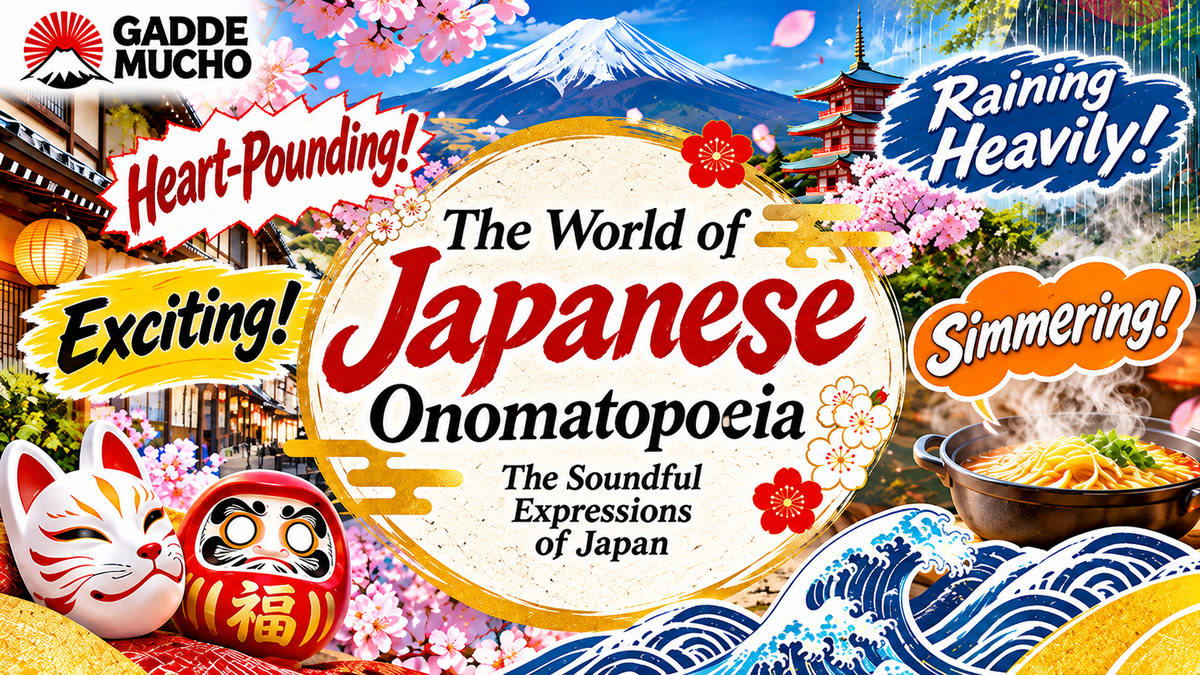
雨の音を「ザーザー」、鍋が煮える様子を「グツグツ」、緊張して胸が高鳴る感じを「ドキドキ」。日本語では、こうした言葉を毎日のように使っています。
これが「オノマトペ」。短いのに、その場の音や空気までいきいきと伝えてくれる、日本語のとても楽しい表現です。今回は、海外の方にも知ってほしいオノマトペの魅力をご紹介します。
オノマトペってなに?
オノマトペは、音や様子を言葉の響きで表したものです。日本語では、大きく分けて次のような種類があるといわれます。
- 擬音語:実際の音を表す言葉(例:ザーザー、ビュービュー)
- 擬態語:物の様子や動きを表す言葉(例:キラキラ、フワフワ)
- 擬情語:人の気持ちを表す言葉(例:ドキドキ、ワクワク)
「音」だけでなく、音のしないもの――光り方や手ざわり、心の動きまで言葉にできるのが、日本語のオノマトペの面白いところです。
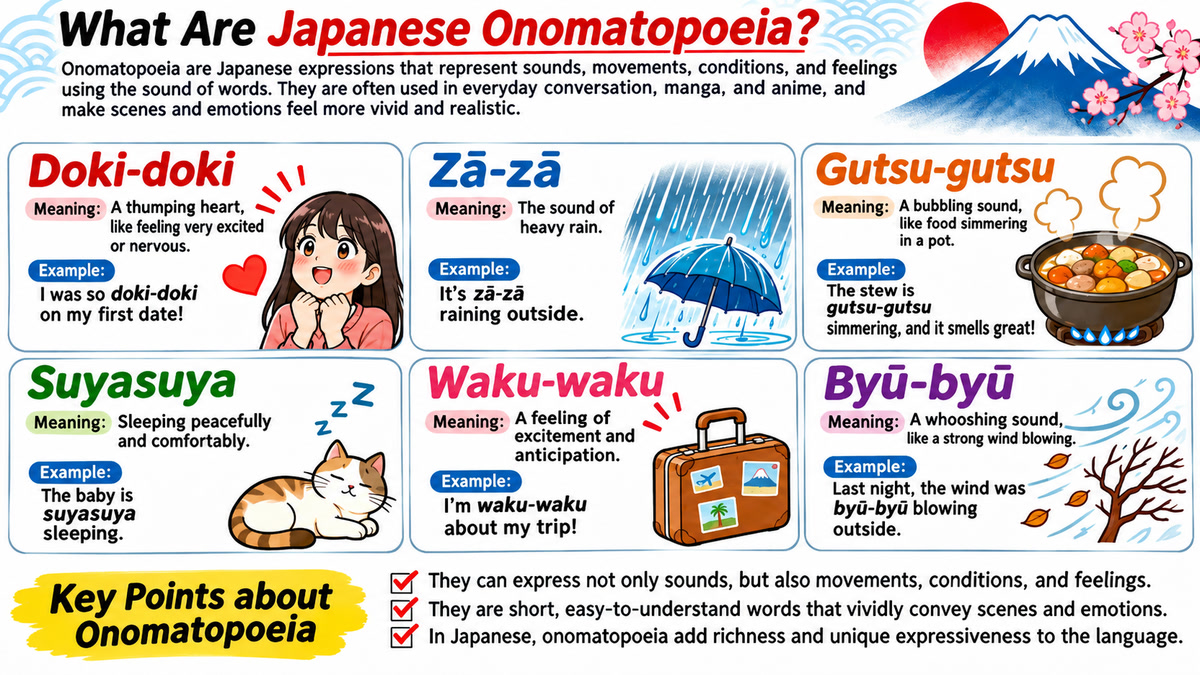
音を表すオノマトペ
まずは、耳で聞こえる音から。同じ雨でも、強さによって言葉が変わります。
- ザーザー:強い雨が降る音。「外はザーザー降りだ」
- グツグツ:鍋の中身が煮える音や様子。「シチューがグツグツ煮えている」
- ビュービュー:強い風が吹く音。「夜じゅう風がビュービュー吹いていた」
様子や気持ちを表すオノマトペ
次は、目に見える様子や心の中。日本の漫画やアニメでも、登場人物の気持ちを伝えるのによく使われます。
- ドキドキ:緊張や期待で胸が高鳴る様子。「初めてのデートでドキドキした」
- ワクワク:楽しみで心が躍る様子。「旅行の前の日はワクワクする」
- スヤスヤ:気持ちよさそうに眠る様子。「赤ちゃんがスヤスヤ眠っている」
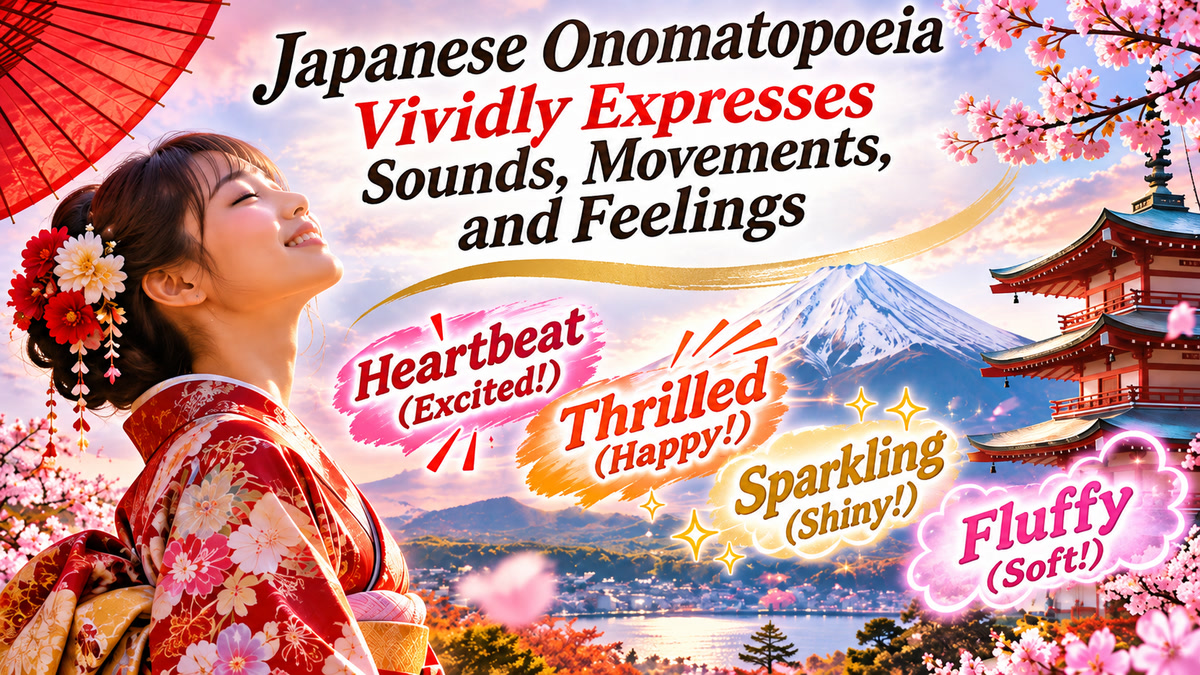
- ペコペコ:とてもおなかがすいた様子。「おなかがペコペコ!」
- キラキラ:光り輝く様子。「星がキラキラ光る」
- フワフワ:やわらかく軽い様子。「フワフワのパンケーキ」
漫画で楽しむオノマトペ
日本の漫画では、オノマトペが絵の中に大きく描かれ、場面の迫力や登場人物の気持ちを伝えます。言葉の意味を知ると、漫画を読むのがもっと楽しくなりますよ。
GADDE MUCHO の Instagram・TikTok・Threads では、オノマトペをテーマにした昭和レトロ風の 3 ページ漫画もご紹介しています。ぜひのぞいてみてください。
ONOMATOPE MASTER Coming Soon
もっとたくさんのオノマトペを知りたい。自分でも使ってみたい。そんな方のために、GADDE MUCHO では日本語のオノマトペをイラストで楽しく学べる「ONOMATOPE MASTER」を準備しています。
発売時期などの詳しいお知らせは、決まりしだい公式サイトと SNS でお届けします。MASTER SERIES の最新情報は、公式サイトの PROJECTS ページをご覧ください。
あなたのお気に入りのオノマトペは何ですか?また次回お会いしましょう!
In Japanese, heavy rain goes "zā-zā," a simmering pot goes "gutsu-gutsu," and a nervous, pounding heart goes "doki-doki." People in Japan use words like these every single day.
These are Japanese onomatopoeia: short, playful words that bring a sound, a scene, or even a mood to life. Here is a friendly introduction for anyone curious about Japan.
What Is Japanese Onomatopoeia?
Onomatopoeia are words that express sounds and situations through the sound of the word itself. Japanese onomatopoeia are often described in three groups:
- Giongo: words for real sounds (e.g., zā-zā for heavy rain, byū-byū for strong wind)
- Gitaigo: words for how things look or move (e.g., kira-kira for sparkling, fuwa-fuwa for soft and fluffy)
- Gijōgo: words for feelings (e.g., doki-doki, waku-waku)
What makes Japanese onomatopoeia so fun is that they can describe things that make no sound at all — the way light sparkles, how something feels to the touch, or what is happening in your heart.
Onomatopoeia for Sounds
Let's start with things you can actually hear. Even rain gets different words depending on how hard it falls.
- Zā-zā: the sound of heavy rain. "It's raining zā-zā outside."
- Gutsu-gutsu: the sound and look of food simmering in a pot. "The stew is simmering gutsu-gutsu."
- Byū-byū: the sound of strong wind. "The wind was blowing byū-byū all night."
Onomatopoeia for Looks and Feelings
Next come the things you can see — and the things you feel inside. Japanese manga and anime use these all the time to show how characters feel.
- Doki-doki: a heart pounding with nerves or excitement. "I was so doki-doki on my first date!"
- Waku-waku: thrilled and looking forward to something. "I'm waku-waku about my trip!"
- Suya-suya: sleeping peacefully. "The baby is sleeping suya-suya."
- Peko-peko: very hungry. "My stomach is peko-peko!"
- Kira-kira: sparkling or shining. "The stars are twinkling kira-kira."
- Fuwa-fuwa: soft, light, and fluffy. "A fuwa-fuwa pancake."
Enjoy Onomatopoeia in Manga
In Japanese manga, onomatopoeia are often drawn right into the artwork, adding energy to the action and showing what characters feel. Once you know what they mean, reading manga becomes even more fun.
On GADDE MUCHO's Instagram, TikTok, and Threads, we're also sharing a retro Showa-style 3-page manga all about onomatopoeia. Come take a look!
ONOMATOPE MASTER Coming Soon
Want to learn even more onomatopoeia — and start using them yourself? GADDE MUCHO is preparing ONOMATOPE MASTER, a fun, illustrated way to learn Japanese onomatopoeia.
We'll share the details, including when it will be available, on our official website and social media as soon as they're decided. For the latest on the MASTER SERIES, visit the PROJECTS page on our official website.
What's your favorite Japanese onomatopoeia? See you next time!